 InvestIntel
Light
Dark
InvestIntel
The financial industry is evolving rapidly, and one of the biggest changes in recent years is the rise of open banking. But what exactly is open banking, and how does it affect you?
Open banking is designed to give consumers more control over their financial data. It allows banks and financial institutions to securely share customer information — with permission — to improve financial services, innovation, and competition.
If you use banking apps, budgeting tools, or digital payment platforms, open banking may already be part of your financial life. Let’s explore what it means and why it matters.
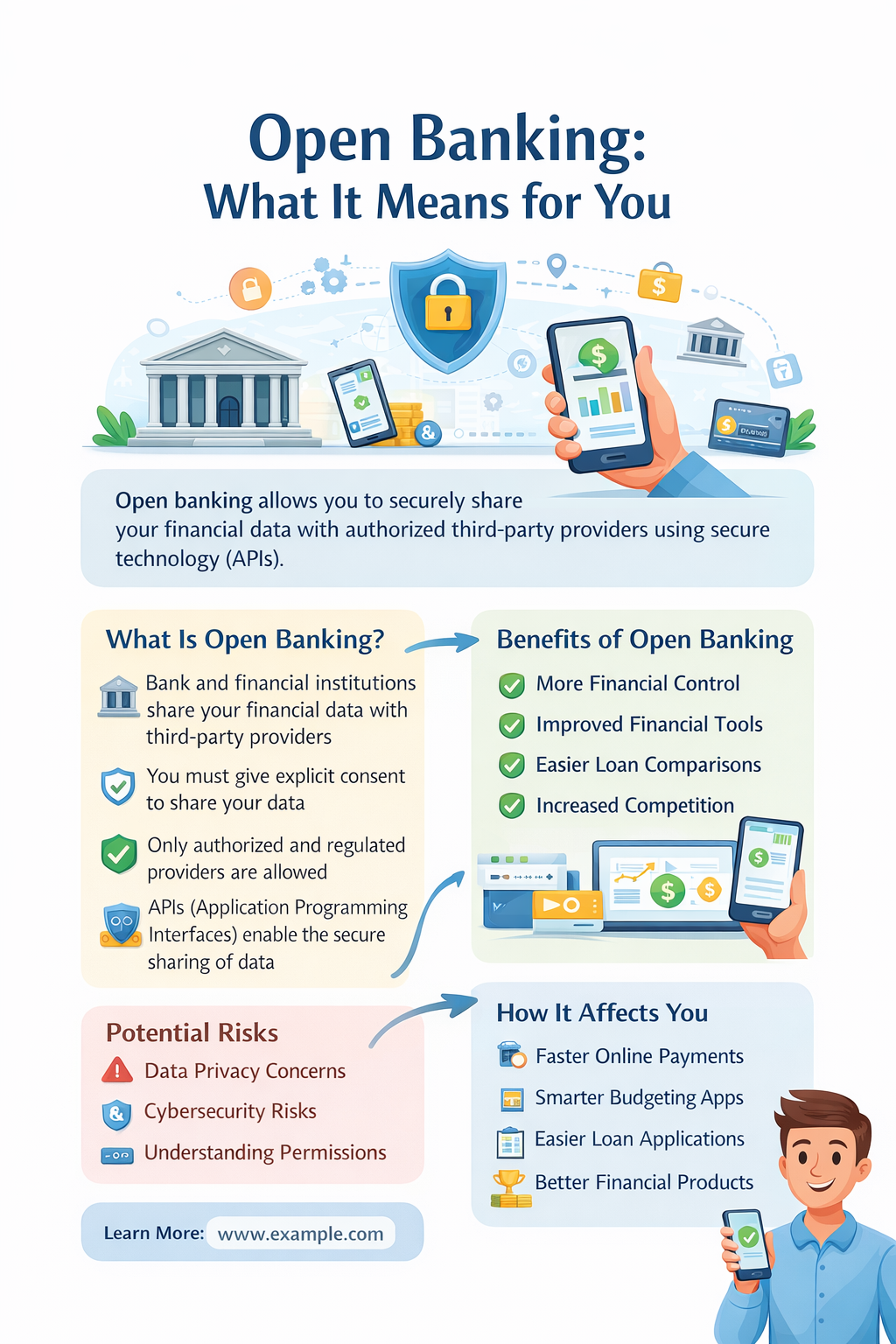
Open banking is a system that enables banks to share financial data with authorized third-party providers through secure technology called APIs (Application Programming Interfaces).
This data sharing only happens with your explicit consent.
Instead of keeping your financial information locked within one bank, open banking allows approved financial service providers to access your data in order to:
Provide better financial tools
Offer personalized services
Improve payment systems
Increase competition in the banking industry
The goal is to create a more transparent and customer-focused financial ecosystem.
Open banking works through secure digital connections between financial institutions and authorized third parties.
Here’s a simplified breakdown:
You grant permission for a third-party app or service to access your financial data.
Your bank securely shares the requested information through encrypted APIs.
The third-party provider uses that data to deliver services such as budgeting insights, loan comparisons, or payment processing.
You can revoke access at any time.
Importantly, open banking does not allow third parties to access your data without your consent.
Open banking can offer several advantages for consumers.
You gain greater control over who accesses your financial data and how it is used.
Many budgeting and money management apps rely on open banking to provide real-time insights into your spending habits.
Open banking can simplify the process of comparing financial products by allowing lenders to review your financial data quickly and accurately — with your approval.
By enabling new financial service providers to enter the market, open banking encourages competition, which can lead to better rates and improved services.
While open banking offers benefits, it’s important to understand potential risks.
Sharing financial data always carries privacy considerations. Make sure you only grant access to trusted, regulated providers.
Although APIs are encrypted and regulated, no digital system is completely immune to cyber threats. Strong passwords and multi-factor authentication are essential.
Before granting access, review exactly what data the third party will receive and how long access will last.
Open banking systems are typically regulated by financial authorities and require strong security standards.
Banks and authorized providers must follow strict compliance guidelines, including:
Data encryption
Secure authentication
Consumer consent protocols
Regulatory oversight
However, consumers still play a role in protecting their information by using secure devices and avoiding suspicious applications.
Open banking can influence your daily financial activities in several ways:
Faster online payments
Smarter budgeting apps
Streamlined loan applications
Better financial product recommendations
As more financial institutions adopt open banking frameworks, consumers may see improved digital banking experiences.
Open banking continues to expand globally. Many countries are developing regulatory frameworks to support secure data sharing and innovation.
Future developments may include:
Enhanced payment solutions
Greater personalization of financial products
Expanded digital identity verification
Integration with emerging financial technologies
As the system matures, transparency and consumer protection remain central priorities.
Open banking represents a significant shift in how financial data is managed and shared. By allowing consumers to control who accesses their financial information, it promotes innovation and competition in the banking sector.
While there are privacy and security considerations, regulated open banking systems aim to protect consumers through strict compliance and security standards.
Understanding open banking helps you make informed decisions about the financial tools and services you use.
The main purpose of open banking is to give consumers control over their financial data while encouraging innovation and competition in the financial industry.
No. Participation in open banking is voluntary, and you must provide consent before your financial data is shared.
Yes. You can revoke access to your financial data at any time through your bank or the third-party provider.