 InvestIntel
Light
Dark
InvestIntel
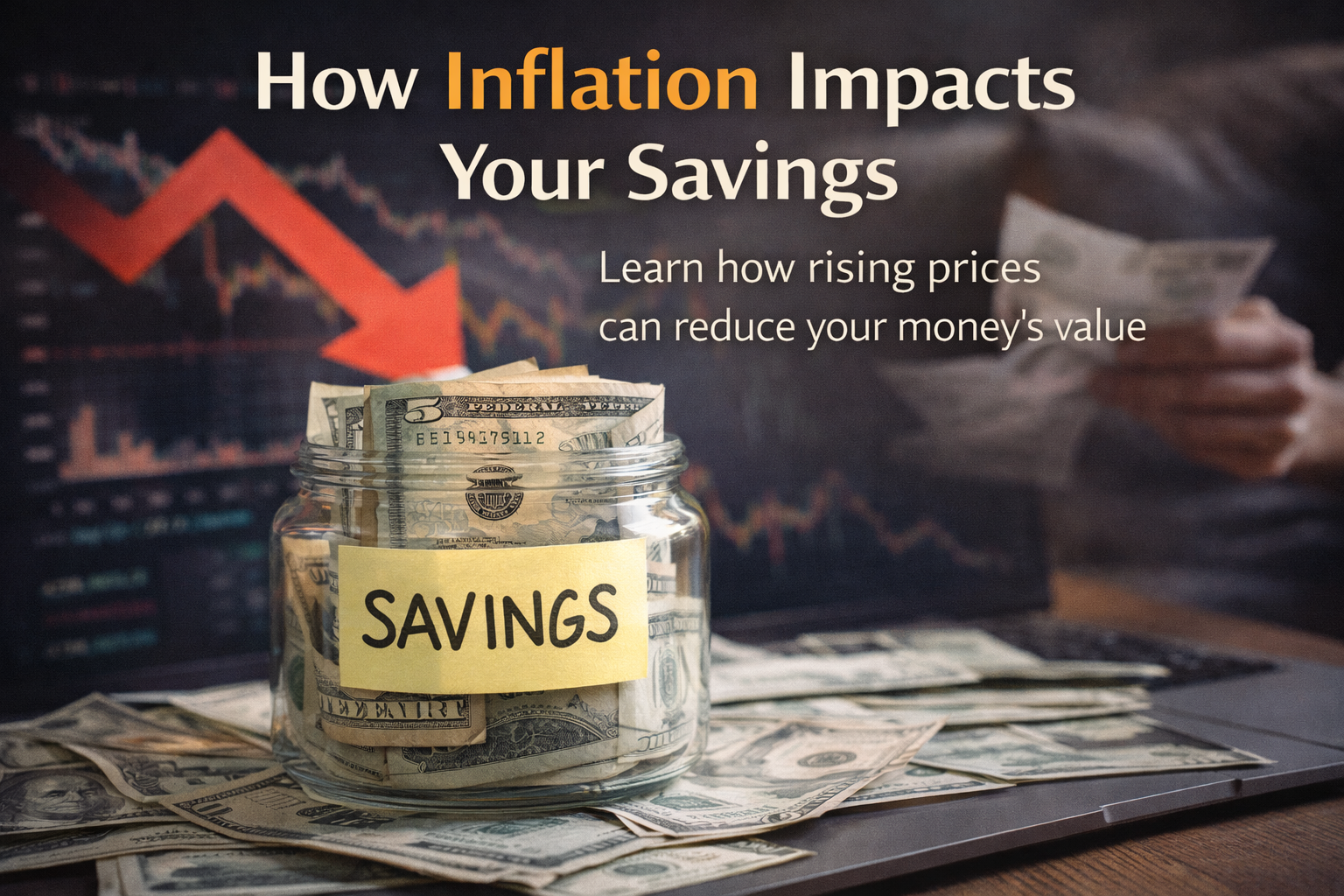
Inflation affects nearly every part of the economy, from grocery prices to housing costs. But one area many people overlook is how inflation impacts your savings.
When inflation rises, the purchasing power of your money declines. This means the same amount of savings may buy less in the future than it does today.
Understanding how inflation impacts your savings is essential for maintaining long-term financial stability and protecting your wealth.
Inflation refers to the general increase in prices over time. As prices rise, the value of money decreases.
For example, if inflation averages 3% per year, something that costs $100 today may cost $103 next year.
While moderate inflation is a normal part of a healthy economy, high or prolonged inflation can significantly affect personal finances.
The most direct way inflation impacts your savings is by reducing purchasing power.
If your savings account earns 1% interest but inflation is 4%, your money is effectively losing value in real terms.
Over time, this gap can significantly erode savings.
Traditional savings accounts often offer modest interest rates. When inflation exceeds those rates, the real return becomes negative.
This means your savings may grow in numbers but lose value when adjusted for rising prices.
Inflation impacts everyday expenses, including:
Food
Utilities
Transportation
Healthcare
Housing
If your income does not rise at the same pace as inflation, your savings may be used more frequently to cover higher living costs.
Inflation’s effects compound over time.
For example, at an average annual inflation rate of 3%, prices could double in approximately 24 years.
Without proper planning, long-term savings goals such as retirement may require significantly more money than initially expected.
Understanding how inflation impacts your savings helps you prepare for these long-term changes.
While inflation cannot be eliminated, there are strategies to reduce its impact.
High-yield savings accounts may offer better interest rates than traditional accounts. Although they may not fully outpace inflation, they can reduce the gap.
Investing in assets that historically outpace inflation may help protect purchasing power.
Examples include:
Stocks
Real estate
Inflation-protected securities
Diversification helps balance risk and return.
Periodically assess whether your savings strategy aligns with current inflation trends.
Adjust contributions and investment allocations when necessary.
Holding large amounts of cash long term may increase exposure to inflation risk.
Maintaining an emergency fund is important, but excess funds may benefit from strategic allocation.
Inflation plays a major role in retirement planning.
If retirement savings are not adjusted for inflation, future expenses may be underestimated.
Long-term retirement strategies often account for inflation when estimating:
Living expenses
Healthcare costs
Income needs
Planning with inflation in mind helps ensure financial security in later years.
Not necessarily. Moderate inflation often signals economic growth.
However, high inflation can reduce consumer confidence and strain household budgets.
The key is managing personal finances in a way that minimizes long-term erosion of value.
Understanding how inflation impacts your savings allows you to make informed financial decisions.
Inflation gradually reduces purchasing power, lowers real returns on savings, and increases living costs over time.
By using high-yield savings accounts, diversifying investments, and reviewing financial plans regularly, you can better protect your savings from inflation’s effects.
Financial awareness is one of the most effective tools for long-term stability.
Inflation reduces purchasing power, meaning your money buys less over time.
Savings and investments serve different purposes. Emergency funds should remain liquid, while long-term investments may help offset inflation.
Many central banks aim for moderate inflation, often around 2%, to support stable economic growth.