 InvestIntel
Light
Dark
InvestIntel
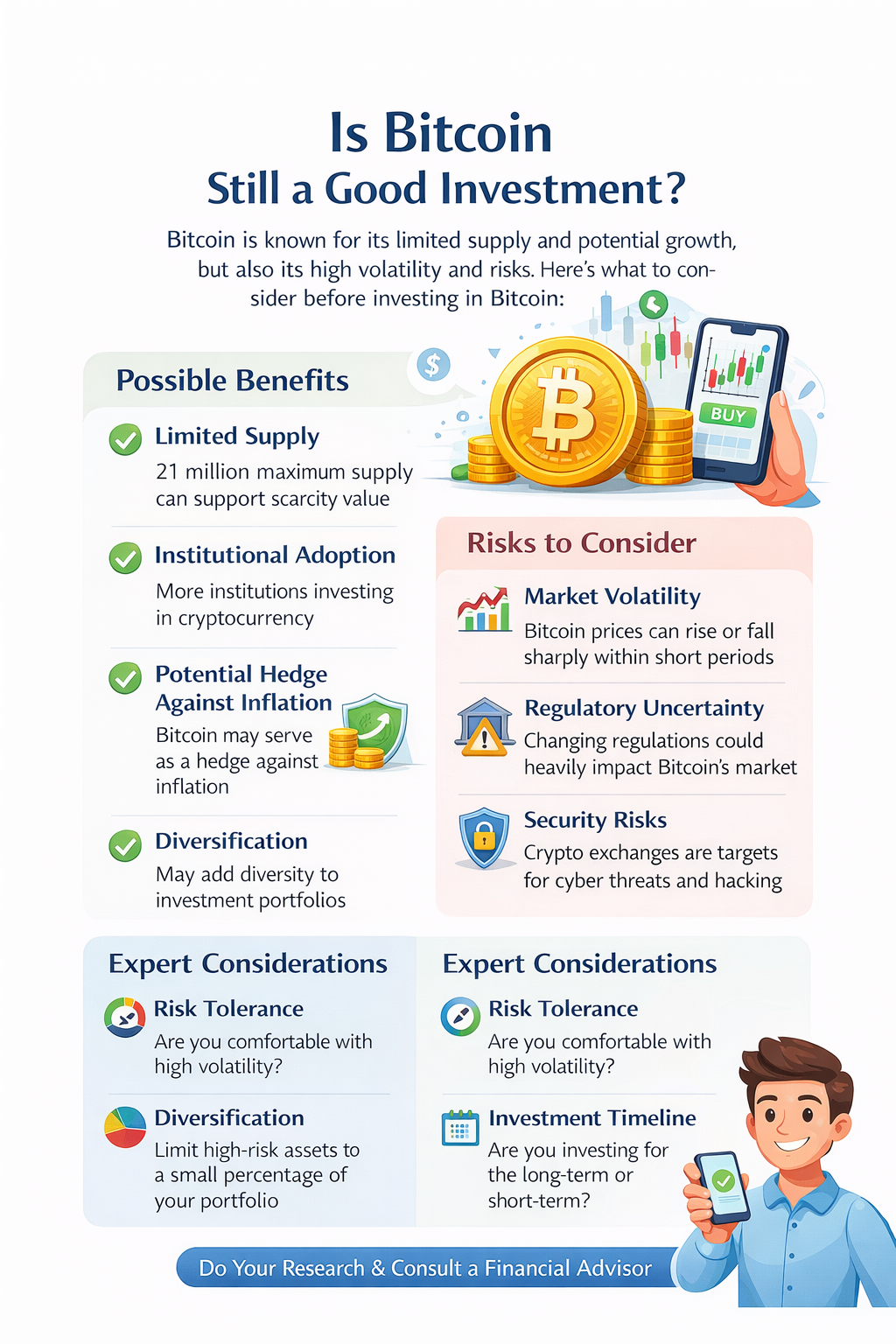
Cryptocurrency investing offers opportunity, but it also carries significant risk. Price volatility, regulatory uncertainty, and market speculation can create large swings in value within short periods.
Understanding how to reduce risk in crypto investing is essential for anyone entering the digital asset space. While risk cannot be eliminated entirely, it can be managed with thoughtful planning and disciplined strategies.
This guide explains practical steps investors can take to approach cryptocurrency more responsibly.
Before learning how to reduce risk in crypto investing, it’s important to understand the main risk factors.
Cryptocurrency prices can rise or fall sharply in a single day. Rapid price changes can be influenced by market sentiment, global events, or regulatory news.
Governments continue to develop cryptocurrency regulations. Policy changes may affect trading, taxation, or market access.
Digital assets are stored electronically, which means cybersecurity is essential. Hacks, phishing attacks, and compromised exchanges remain concerns.
Crypto markets are often influenced by hype and social media trends, which can drive short-term price movements.
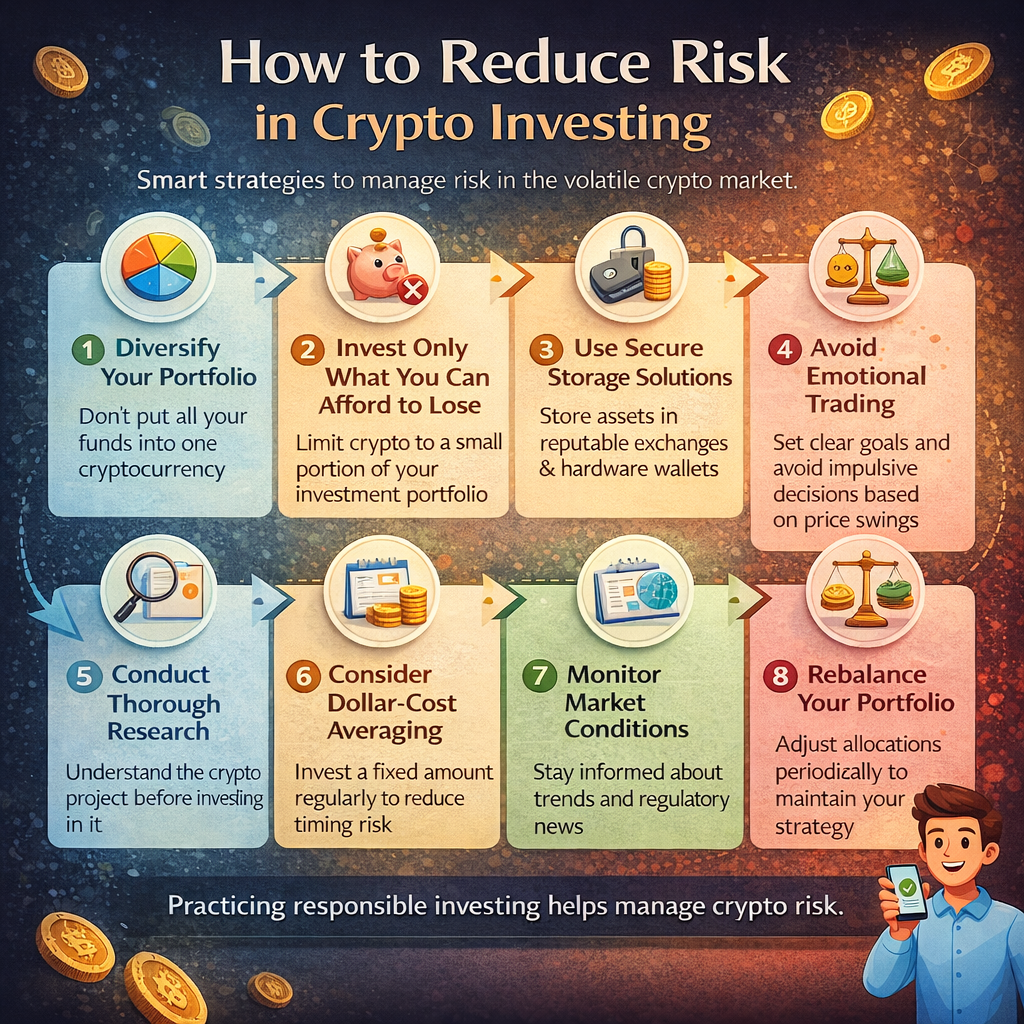
Diversification is one of the most effective ways to reduce risk in crypto investing.
Instead of investing all funds into one cryptocurrency, consider spreading exposure across:
Multiple digital assets
Different sectors within crypto (such as infrastructure or decentralized finance)
Traditional assets like stocks or bonds
Diversification helps reduce the impact of a decline in any single asset.
Cryptocurrency should generally represent a limited portion of an overall investment portfolio.
Many financial professionals suggest allocating only a small percentage of total investments to high-risk assets. This approach protects long-term financial stability.
Avoid using essential savings or emergency funds for speculative investments.
Security plays a major role in reducing crypto investment risk.
Best practices include:
Using reputable exchanges
Enabling two-factor authentication
Storing assets in hardware wallets for long-term holding
Avoiding suspicious links or unknown platforms
Protecting your digital assets is as important as choosing the right investments.
Crypto markets often trigger emotional reactions. Fear during price drops and excitement during rallies can lead to impulsive decisions.
To reduce risk:
Set clear investment goals
Establish entry and exit strategies
Avoid reacting to short-term market noise
A disciplined approach can help minimize avoidable losses.
Before investing in any cryptocurrency, take time to understand:
The project’s purpose
The development team
Token supply structure
Market demand
Security audits
Informed decisions reduce exposure to poorly structured or high-risk projects.
Dollar-cost averaging involves investing a fixed amount at regular intervals rather than making a large one-time purchase.
This strategy:
Reduces the impact of short-term volatility
Helps avoid poor timing decisions
Encourages long-term consistency
While it does not eliminate risk, it can smooth price fluctuations over time.
Understanding broader market conditions can help manage exposure.
Key factors to watch include:
Global economic trends
Interest rate changes
Major regulatory announcements
Bitcoin market dominance
Being informed allows investors to adjust strategy when necessary.
Over time, crypto price movements may change your asset allocation.
Rebalancing involves:
Reviewing portfolio percentages
Adjusting allocations to maintain target risk levels
Selling portions of assets that exceed planned exposure
This process helps prevent overconcentration in volatile assets.
Crypto investing requires patience and discipline. Short-term speculation increases risk, while long-term strategy may improve stability.
Reducing risk in crypto investing does not mean eliminating volatility. Instead, it means preparing for it.
Responsible investors focus on:
Financial goals
Risk tolerance
Diversification
Continuous learning
Understanding how to reduce risk in crypto investing can help you navigate market volatility with greater confidence.
By diversifying, investing responsibly, securing assets properly, and maintaining discipline, investors can manage exposure more effectively.
Cryptocurrency remains a high-risk asset class, and informed decision-making is essential. Risk management should always be part of any digital asset strategy.
There is no completely risk-free method. However, diversification, secure storage, and disciplined allocation can reduce overall exposure.
Allocation depends on individual risk tolerance, but many investors limit crypto to a small percentage of total investments.
No. Cryptocurrency markets are inherently volatile. Risk can be managed but not completely removed.