 InvestIntel
Light
Dark
InvestIntel
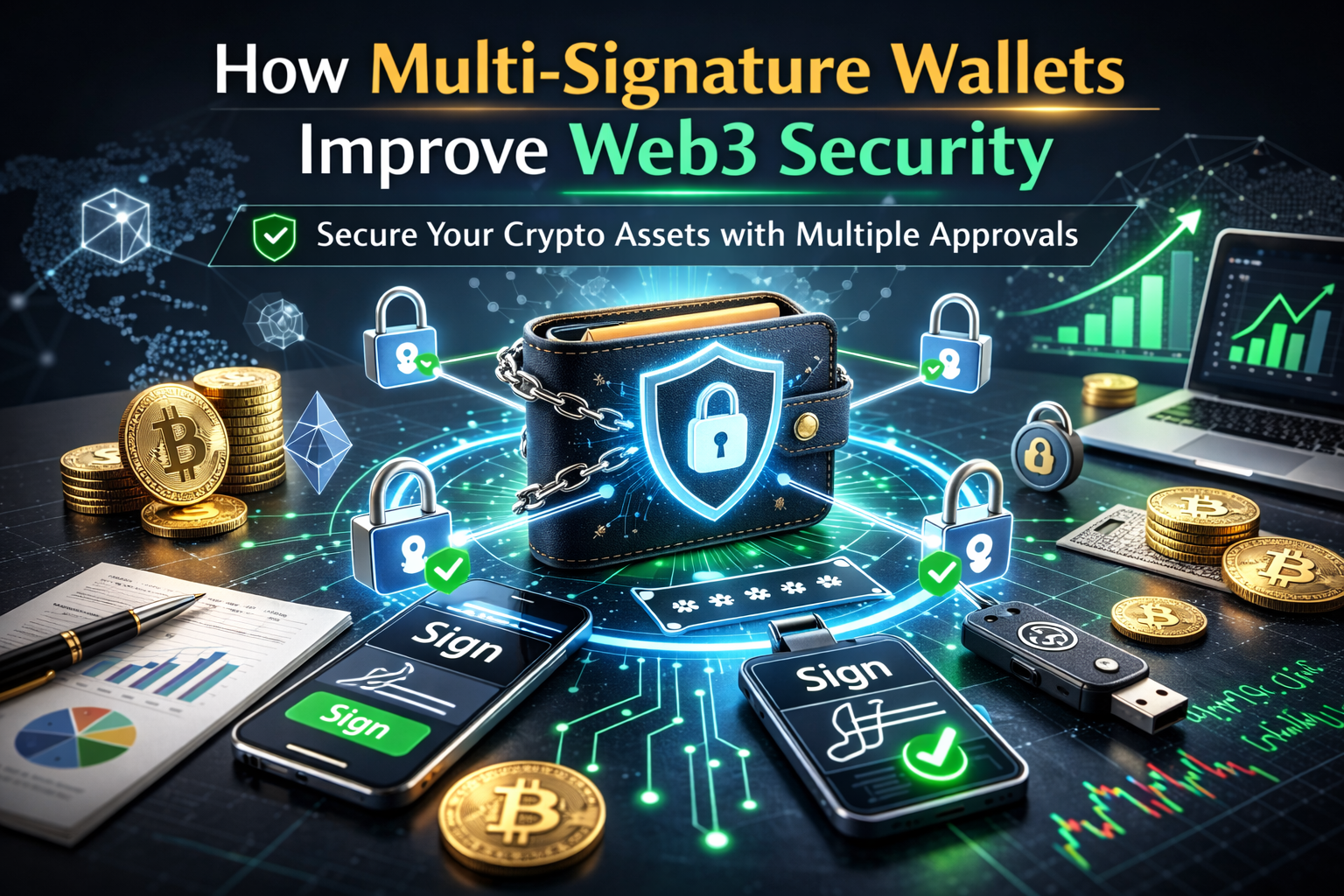
Security is one of the most important concerns in the blockchain ecosystem. As Web3 adoption grows, protecting digital assets becomes increasingly critical.
Traditional Web3 wallets rely on a single private key. If that key is compromised, funds can be lost. This is where multi-signature wallets come into play.
Understanding how multi-signature wallets improve Web3 security can help individuals, businesses, and decentralized organizations protect their assets more effectively.
A multi-signature wallet, often called a “multi-sig wallet,” requires multiple private keys to authorize a transaction.
Instead of one person controlling access, two or more parties must approve transactions before funds are moved.
For example:
A 2-of-3 wallet requires at least two approvals out of three authorized keys.
A 3-of-5 wallet requires three approvals from five designated key holders.
This setup significantly reduces single-point failure risks.
Single-key wallets rely on one private key. If that key is lost, stolen, or compromised, funds may be unrecoverable.
Multi-signature wallets distribute control across multiple keys, reducing the risk of total asset loss.
For businesses and decentralized organizations, internal fraud can be a concern.
Requiring multiple approvals ensures no single individual can move funds without authorization.
This is particularly useful for:
DAOs (Decentralized Autonomous Organizations)
Crypto startups
Corporate treasury management
Multi-signature wallets encourage collaborative decision-making.
Transactions typically require documented approvals, improving accountability and governance within organizations.
This structure aligns well with decentralized principles.
Even if one device is compromised, attackers cannot access funds without additional approvals.
This layered protection strengthens overall wallet security.
Multi-signature wallets are especially useful for:
Web3 businesses managing large treasuries
DAO governance
Investment groups
High-value individual crypto holders
For everyday users with smaller holdings, single-signature wallets combined with strong security practices may be sufficient.
The process typically follows these steps:
Wallet participants generate their individual private keys.
The wallet is configured with an approval threshold (e.g., 2-of-3).
When a transaction is initiated, it must be signed by the required number of key holders.
Once the approval threshold is met, the transaction is executed on the blockchain.
All signatures are cryptographically verified before execution.
While multi-signature wallets improve security, they also introduce complexity.
Multiple approvals may slow transaction processing.
If too many keys are lost, access to funds may become difficult.
Multi-sig wallets may require more technical knowledge than standard wallets.
Balancing security and usability is important.
Single-signature wallets:
Simpler setup
Faster transactions
Higher personal responsibility
Multi-signature wallets:
Increased security
Reduced insider risk
Better for shared funds
Choosing the right solution depends on asset value and organizational structure.
As Web3 continues expanding into decentralized finance, NFTs, and tokenized assets, secure treasury management becomes essential.
Multi-signature wallets support:
Institutional adoption
Enterprise-level security
Decentralized governance models
They are likely to remain an important component of blockchain infrastructure.
Understanding how multi-signature wallets improve Web3 security highlights the importance of layered protection in digital asset management.
By distributing transaction authority across multiple private keys, multi-signature wallets reduce single-point failure risks, enhance governance, and strengthen asset security.
While not necessary for every user, they provide valuable protection for organizations and high-value accounts in the evolving Web3 ecosystem.
A multi-signature wallet requires multiple private key approvals before executing a transaction.
They reduce single-point failure risk and improve security, especially for shared or high-value funds.
No. They reduce certain risks but still require secure key management and responsible practices.