 InvestIntel
Light
Dark
InvestIntel
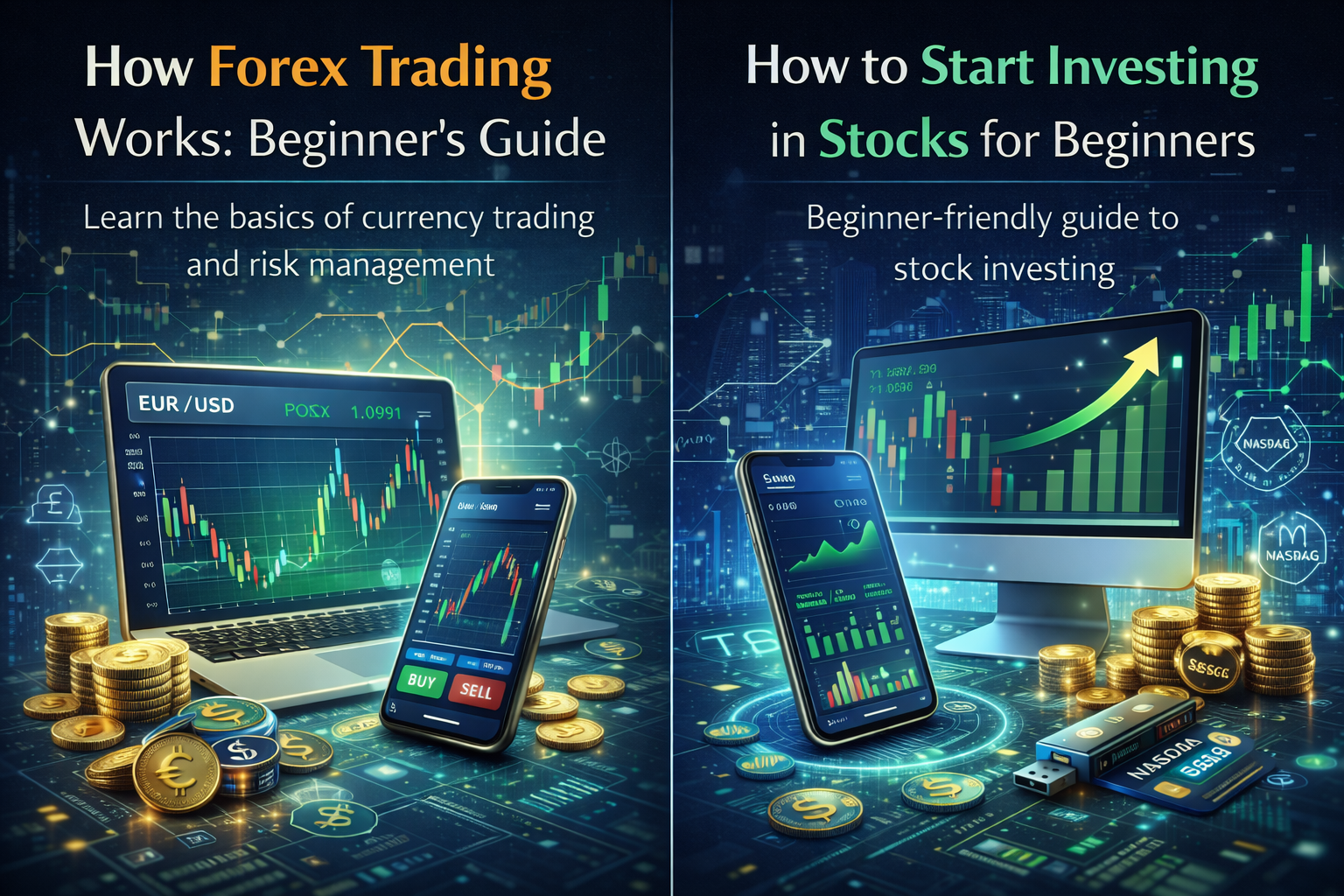
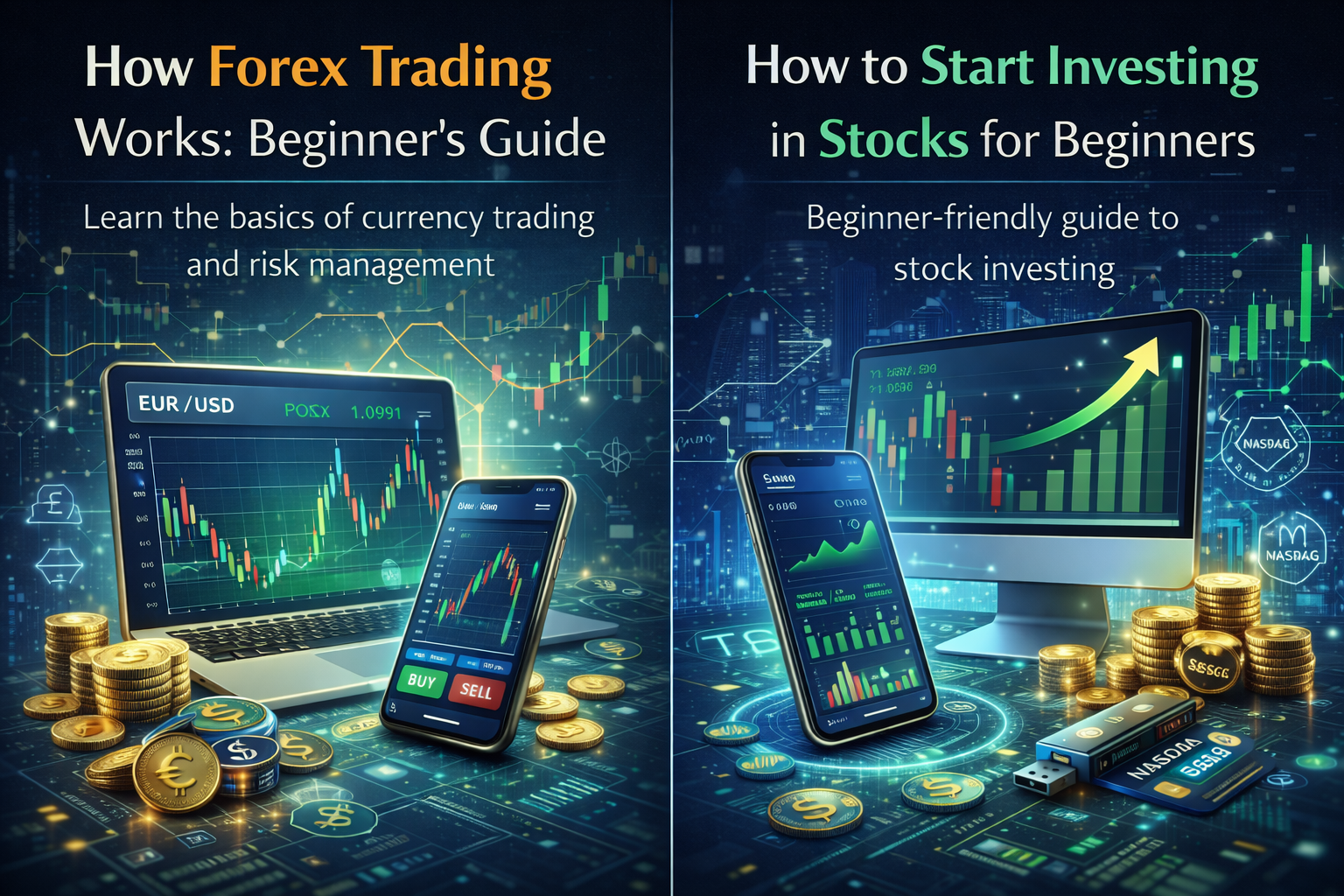
The foreign exchange market, commonly known as forex or FX, is the largest financial market in the world. Every day, trillions of dollars are exchanged between global currencies.
Understanding how forex trading works is essential before entering this fast-moving market. While it offers opportunities, it also carries significant risk.
This beginner’s guide explains the fundamentals of forex trading in clear and practical terms.
Forex trading involves buying one currency while simultaneously selling another.
Currencies are traded in pairs, such as:
EUR/USD
GBP/USD
USD/JPY
When you trade forex, you speculate on whether one currency will strengthen or weaken relative to another.
A currency pair has two parts:
Base currency (first currency)
Quote currency (second currency)
If EUR/USD is trading at 1.10, it means 1 euro equals 1.10 U.S. dollars.
If the price rises, the base currency is strengthening. If it falls, it is weakening.
Several factors influence currency prices:
Interest rates, inflation, employment reports, and GDP figures can impact currency strength.
Decisions on interest rates and monetary policy significantly affect exchange rates.
Political stability, trade agreements, and global tensions can move forex markets.
Leverage allows traders to control larger positions with a smaller amount of capital.
For example, 1:100 leverage means $1,000 can control a $100,000 position.
While leverage increases potential returns, it also increases risk. Losses can exceed initial deposits if not managed carefully.
Because forex markets are volatile, risk management is crucial.
Common strategies include:
Setting stop-loss orders
Limiting position size
Avoiding excessive leverage
Diversifying trades
Successful traders focus on preserving capital rather than chasing quick profits.
Forex trading can be complex and requires education and discipline.
Beginners should:
Use demo accounts
Start with small amounts
Study economic indicators
Avoid emotional trading
Understanding how forex trading works reduces the likelihood of costly mistakes.
Forex trading involves speculating on currency price movements influenced by global economic factors.
While the forex market offers liquidity and flexibility, it carries significant risk. Education, discipline, and risk management are essential.
Careful preparation is the foundation of responsible trading.
It varies by broker, but beginners should start with money they can afford to risk.
Yes. Currency markets can be highly volatile. Get Started